Health and Safety Policy for Gardeners Aldwych
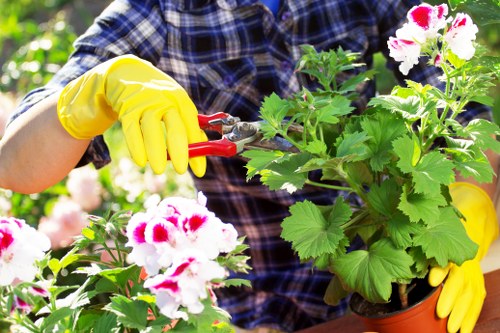 Our Health and Safety Policy is designed to support safe, responsible, and professional gardening work in every setting. For Gardeners Aldwych, this means planning each task carefully, identifying hazards before work begins, and making sure everyone involved understands their role in maintaining a secure working environment. Whether the work involves lawn care, planting, pruning, or general grounds maintenance, safety remains central to every decision.
We recognise that gardening can involve a wide range of risks, including manual handling, sharp tools, uneven surfaces, moving machinery, weather exposure, and interaction with the public or nearby property. To reduce these risks, our team follows clear procedures, uses suitable equipment, and applies a practical approach to safe working. Every job is assessed before work starts so that protective measures can be put in place at the right time.
Our policy is built on prevention, communication, and ongoing awareness.  Each garden contractor is expected to work in a way that protects themselves, colleagues, clients, and visitors. This includes using tools correctly, maintaining good housekeeping, and reporting concerns immediately. In practice, this helps create a safer environment for everyone while preserving the quality and efficiency of the gardening service.
 Risk assessment is an important part of our health and safety process. Before beginning a task, we review the site conditions, the type of work required, and any factors that may affect safe completion. This may include checking access routes, looking for trip hazards, confirming the stability of working areas, and considering the impact of weather. Where necessary, tasks are adjusted to match the conditions on the day.
Garden safety also depends on the correct use and maintenance of equipment. All tools and machinery must be inspected before use and kept in good working order. Blades, cords, fuel, batteries, and protective guards are checked regularly to make sure they remain safe and effective. Damaged or faulty equipment is removed from service until it has been repaired or replaced. This reduces the chance of incidents and helps maintain a professional standard of work.
Personal protective equipment is used wherever needed to reduce exposure to avoidable hazards. Depending on the task, this may include gloves, safety footwear, eye protection, hearing protection, or high-visibility clothing. Staff are expected to wear suitable clothing for the season and the nature of the work, while also remaining alert to environmental conditions such as heat, cold, rain, or strong sunlight. 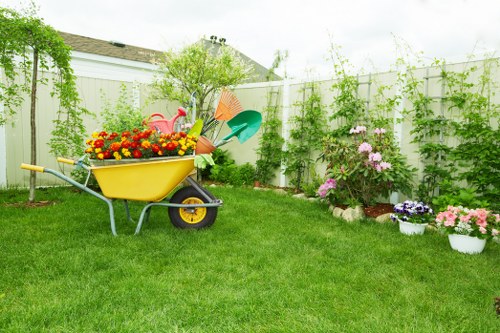 Safe work practices are especially important when using ladders, cutting equipment, or handling heavy materials.
Manual handling is another key part of this policy. Gardening work often involves lifting bags, moving soil, carrying tools, and repositioning materials. To reduce strain and injury, loads should be assessed before being moved, and mechanical assistance or team lifting should be used where appropriate. Good technique, sensible pacing, and clear communication all help prevent accidents and support long-term wellbeing.
We also place strong emphasis on training and supervision. All workers are expected to understand the basics of safe gardening practice, emergency awareness, and the proper use of equipment. New team members receive appropriate instruction before carrying out tasks independently, and experienced workers are reminded to follow established procedures consistently. Safety awareness is not treated as a one-time task; it is part of everyday working behaviour.
In addition, environmental responsibility is closely linked to health and safety. Waste materials, cuttings, and debris should be collected promptly to keep work areas clear and reduce slipping or tripping hazards. Chemicals, fuels, and other substances must be stored and handled carefully in line with safe working methods. Where possible, we aim to use controlled, sensible practices that minimise unnecessary risk while still achieving excellent results. This is a core part of responsible garden maintenance.
 Emergency readiness is also included within the policy. If an accident, injury, spill, or dangerous situation occurs, work must stop and the area must be made safe where possible. The incident should then be reported through the proper internal process so that action can be taken quickly. First aid supplies and basic emergency procedures should be available to support a swift response when needed.
We expect all staff to contribute to a positive safety culture by speaking up about hazards, following instructions, and taking care of others as well as themselves. A successful gardeners health and safety policy depends on shared responsibility. It is not only about rules, but also about awareness, discipline, and respect for the working environment. By staying attentive and acting early, many potential problems can be prevented before they develop.
Review and improvement are essential to keeping the policy effective. As working conditions, equipment, and best practices change, our procedures are reviewed and updated to remain relevant. Feedback from internal observations, incident records, and routine checks helps refine how tasks are carried out. This ongoing approach supports a reliable standard of safety across all garden-related work and reflects our commitment to professional garden care with wellbeing at its centre.